

News
July 7, 2025
A successful introduction: the zander has settled down in Lake Sundozero and continues to spread

Scientists of the Institute of Biology KarRC RAS have published the results of long-term observations over the population of the zander (or pikeperch) introduced to Lake Sundozero more than a half-century ago. They confirm the species has become naturalized. Maintaining the population requires regulation of harvesting, protection during spawning, and tending of spawning grounds.
The results of the study were published in the Russian Journal of Biological Invasions. This is a first detailed analysis of the biological characteristics of the zander in Lake Sundozero (Kondopoga District, Republic of Karelia). The data collected by the scientists suggest the species has not just settled down in the new place but also started unassisted expansion further along Karelia’s hydrological system.

Introductions of the zander to Sundozero started back in 1965. Nearly seven million fry were stocked into the lake in the course of five years. The brood stock came from Karelia’s largest lakes – Syamozero and Onego. The efforts were meant to improve the quality of the fish fauna and augment the productivity for fisheries.

Over half a century has passed since then. Considering zander’s fairly long life cycle, this time should be enough to speak of the species’ naturalization. The research results indicate that the zander has more than just made the lake their home, but has turned into a major predator in the local food chain. Its diet in Sundozero mainly consists of perch (40%), vendace (25%), ruffe, and roach. Zanders in the lake grow to a maximum of 52 cm and 1.7 kg. This is similar to fish from Lake Syamozero. Onego zanders are larger, due to a wider food range and greater foraging spaces.
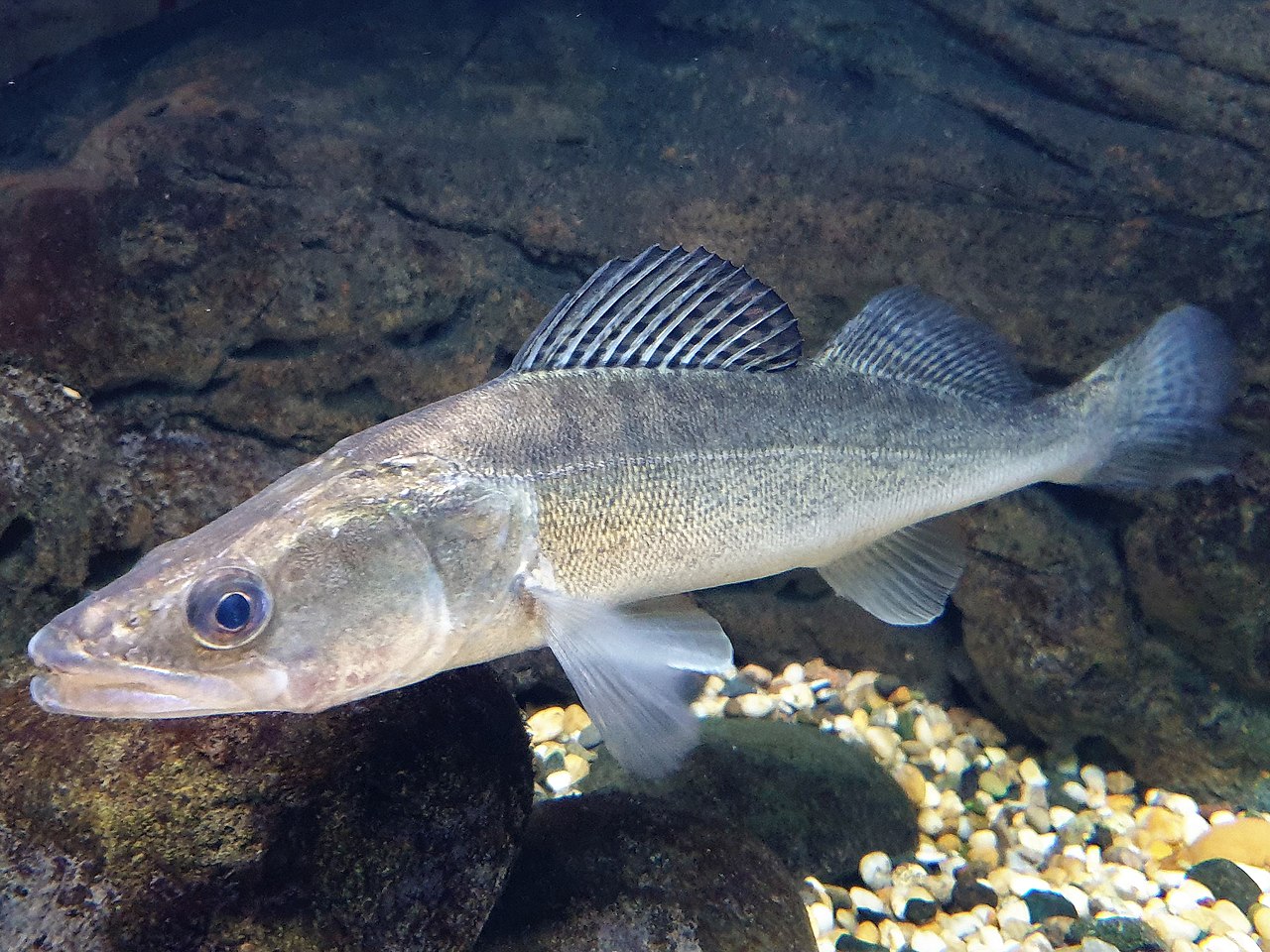

Zander (Sander lucioperca). Photo: wikipedia.org[href]wikipedia.org

As well as the zander, other species have been introduced to lakes of Karelia: Arctic char, vendace, smelt, common bream, sterlet, carp, and even an amphipod from Baikal. Few of them have managed to become naturalized. The most successful were the zander, pink salmon, and vendace. The introductions of trout from Lake Sevan, carp, and eel in Karelian lakes have failed.

The introduction of vendace to Karelian lakes has had a favorable effect on their fauna since for small bodies of water vendace is the only plankton feeder.

– The aim of the introduction was to enhance the composition of the fauna. We have lakes inhabited by valuable fish species, but in many lakes the fauna is mostly composed of roach, ruffe, perch. It was deemed more effective to introduce local fishes that aliens from other regions. Attempts have been made to introduce quite a few coregonid and salmonid species from other regions, but the only positive outcome has been attained for the pink salmon. Even in this case, the fish from southern (Sakhalin) populations stocked during earlier introductions did not survive our harsh climate. It was only when specimens were brought over from the Kamchatka area that the pink salmon settled down in Karelia and spread over the Kola Peninsula and beyond, – noted Director of the Institute of Biology KarRC RAS Nikolai Ilmast, an author of the study.

Scientists believe the success of the introduction of zander from Syamozero to Sundozero is due to the similar ecological conditions in the lakes and the nearly identical dietary ranges. The actions needed now to maintain the population include regulation of fishing, protection during spawning, and remediation of spawning grounds. Apart from Sundozero, zander has been introduced to 13 other lakes of Karelia. The introductions were successful in nine of them and commercial fishing for the species takes place in most of them.

See also:

December 1, 2025
Russian Science Foundation supported Karelian scientists’ projects

Four grant applications submitted by scientists of the Karelian Research Centre RAS were approved by the Russian Science Foundation. The projects by Karelian researchers deal with issues such as building a methodology for the identification, monitoring, and protection of certain wetlands, increased mortalities among young farmed trout relocated to natural water bodies, assessing the anti-inflammatory properties of natural dietary supplements promising for trout farming, and reconstruction of the thermal history of the Earth's crust formation in northern Karelia and southern Murmansk Region.
November 28, 2025
Scientists of KarRC RAS took part in Young Scientists’ Congress at Sirius

A group of researchers from KarRC RAS took part in the 5th Young Scientists’ Congress held at the Sirius Federal Territory in Sochi. Over eight thousand participants from more than a hundred countries – early-career and renowned scientists, officials and businesspersons – worked actively at the plenary sessions and discussion grounds of this international scientific forum.
November 28, 2025
Karelian scientists and tour operators from regions of Russia discussed tourism development in the Arctic

Researchers at the KarRC RAS analyzed current trends and identified prospects for the development of Arctic tourism based on the judgments of tour operators from all regions of the Russian Arctic. The results of this study, their applications, and potential solutions to existing problems were discussed by participants of the 5th Workshop "Integrated Development of Arctic Territories: an Expert Opinion," which brought together interested specialists from the country's northern regions.
November 26, 2025
KarRC RAS to run trials of Belarusian technologies for woody plant reproduction

KarRC RAS CEO Olga Bakhmet signed a cooperation agreement with the Belarusian Republican Forest Breeding and Seed Production Center (RBSPC). Karelian Research Centre RAS will be a base for trying out Belarusian technologies for reproduction of woody plants in a northern environment.