



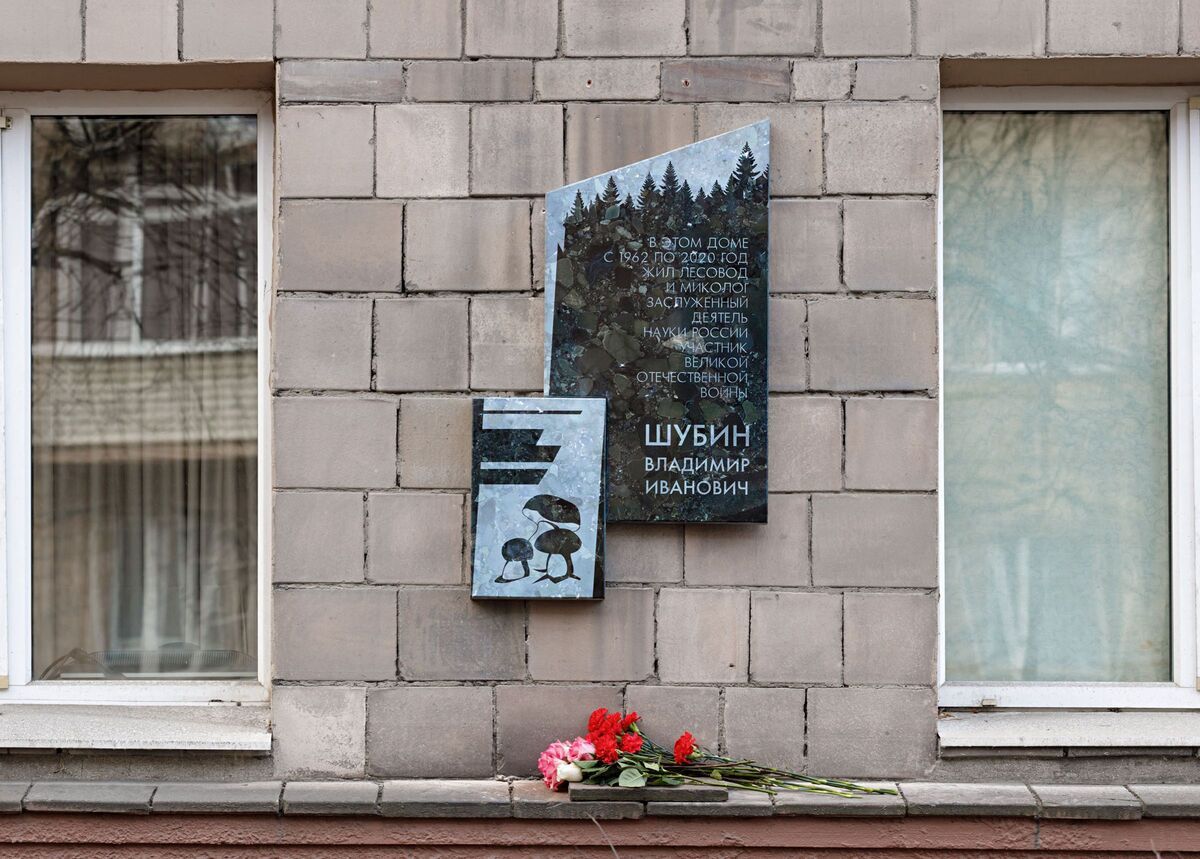
Vladimir Shubin (1925–2020) is a specialist in forest regeneration and forest mycology known widely in Russia as well as abroad. He devoted 65 years to studying Karelian forests. Mycology was the subject of his over 260 academic papers and postdoc dissertation. Shubin’s popular-science book “Mushrooms of Northern Forests” went through five editions.
Vladimir Shubin's scientific career was preceded by the brutal war time: he was drafted into the army at the age of 17. He fought on the Leningrad and 2nd Belorussian Fronts, took part in the Königsberg operation, and advanced all the way to Germany. Vladimir Ivanovich was awarded the medals For Courage, For the Capture of Königsberg, For the Victory over Germany, and 2nd Class Order of the Patriotic War.
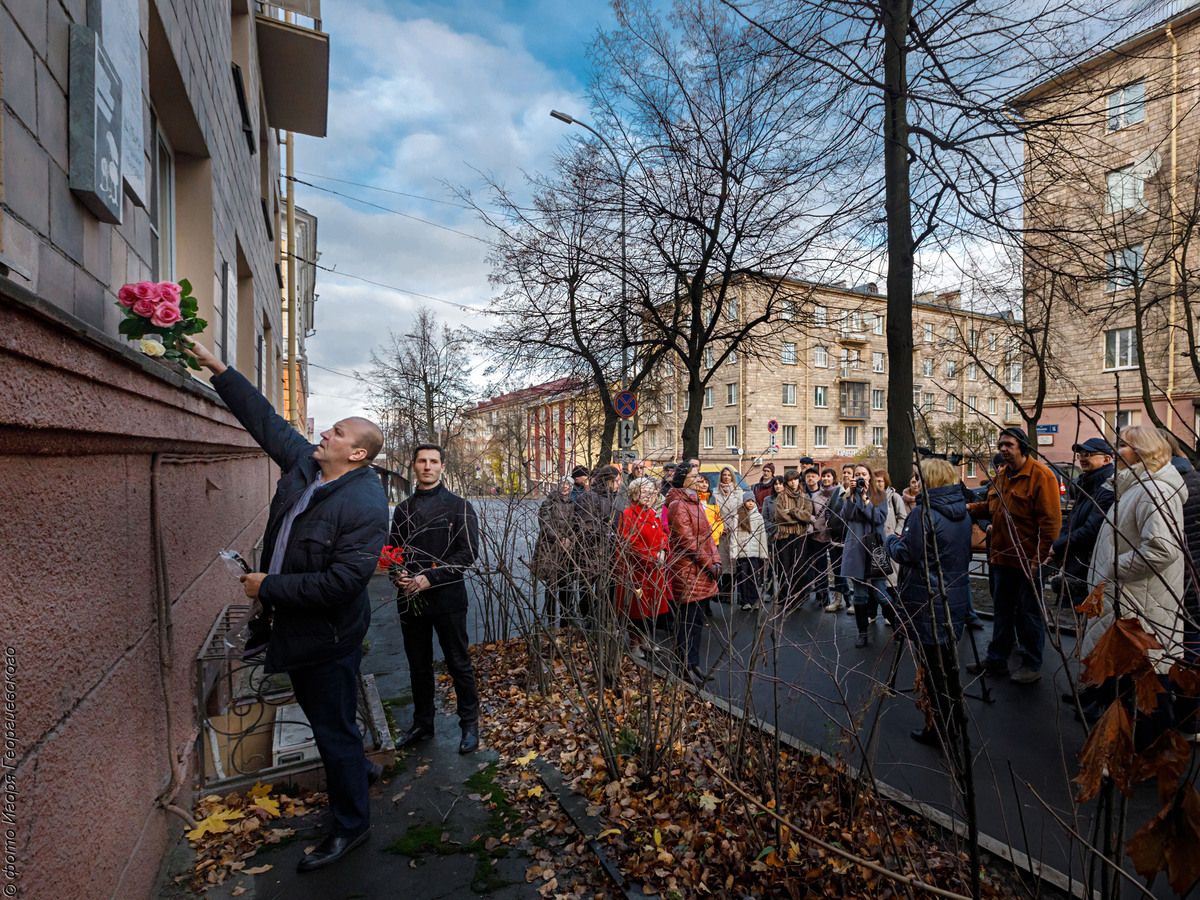
Vladimir Shubin’s family members laying flowers to the plaque
The memorial plaque, authored by sculptor Alexander Akulov, is made of conglomerate. It depicts the forest and mushrooms as reference to the scientists’ major works and his famous book. The unveiling ceremony gathered Vladimir Shubin’s colleagues and family. The ceremony was opened by KarRC RAS Director General Olga Bakhmet.
– We remember Vladimir Ivanovich very well. Many of us here have worked with him for years. I was lucky to have been his colleague since the early ‘90s. Vladimir Ivanovich was a really nice person. During expeditions, he was considerate and always helped his colleagues, especially the younger staff members who were new to the field conditions, – recollected the Center’s leader.
She mentioned that Vladimir Shubin headed one of the Forest Research Institute’s leading laboratories – Laboratory of Forest Regeneration and Protection – for over 20 years. Developments and recommendations of great significance for forestry were produced under the scientist’s guidance.
– An important point is that in addition to the publication of papers and monographs on forest regeneration, many practical recommendations were given, which have proven highly valuable for all subsequent work in this field, – stressed Olga Bakhmet.
Deputy Head of the Petrozavodsk City Administration Diana Yevstigneeva congratulated all residents on the new monument on behalf of the administration.
– Petrozavodsk is not just buildings and streets – it’s first and foremost the people. People who make the city’s history and glory. People who leave a lasting legacy. This certainly includes WWII veterans and researchers like Vladimir Ivanovich Shubin, – said Diana Yevstigneeva, thanking KarRC RAS for this initiative and for perpetuating the memory.
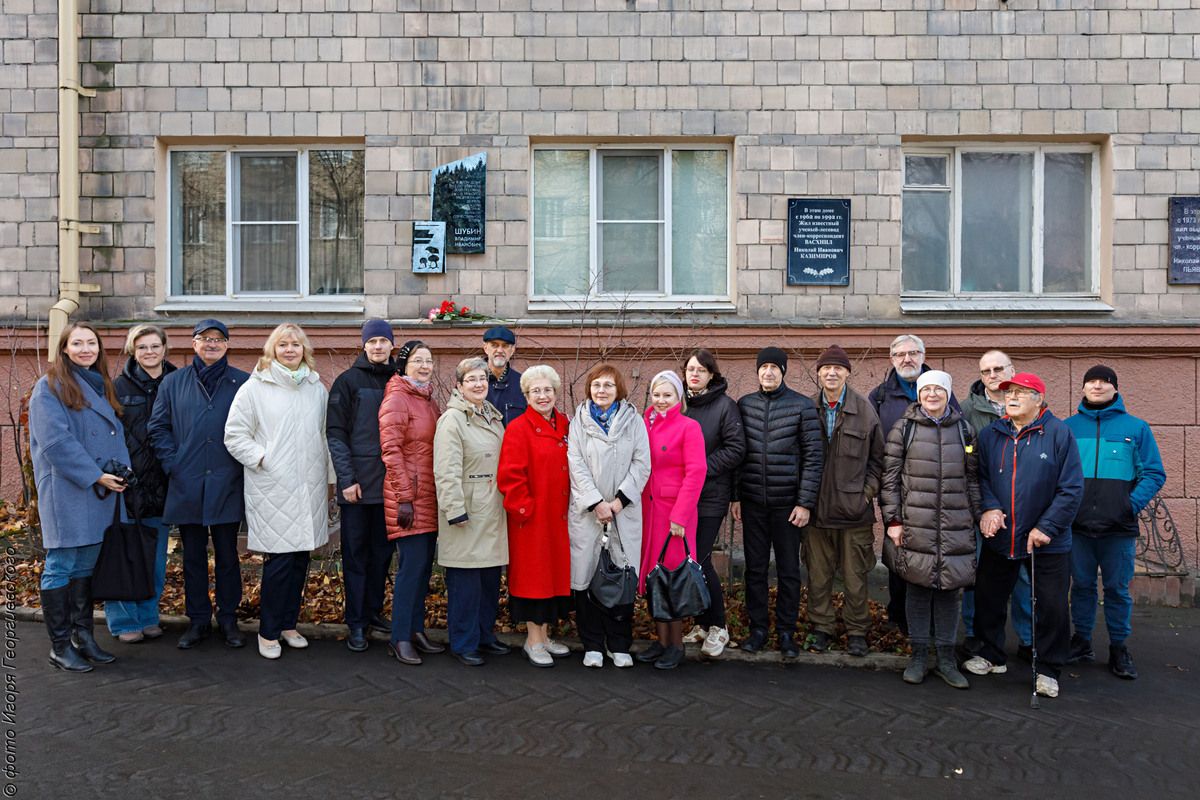
KarRC RAS employees at the unveiling ceremony
Wrapping up the event, Director of the Forest Research Institute KarRC RAS Aleksey Pekkoev noted that Vladimir Shubin set the example for the younger generation of researchers, and his discovering and papers on forest regeneration issues still remain relevant.
– Reading his books and articles we feel certain they will serve not only the current generation but also those to come, and that the memory of him will continue to live on in our hearts, – summed up Aleksey Pekkoev.
Further events commemorating the centennial anniversary of Vladimir Shubin’s birth are an open session of the Learned Council of the Forest Research Institute, and mycology lectures and exhibition launch at the Environmental Research Museum.
Photos: Igor Georgievsky / KarRC RAS