

News
January 11, 2023
Over 600 people have visited the Museum of Applied Environmental Research at KarRC RAS since its opening in the fall 2022. In the new year, the Museum plans to widen its audience, augment the exhibition, and begin to use new formats.
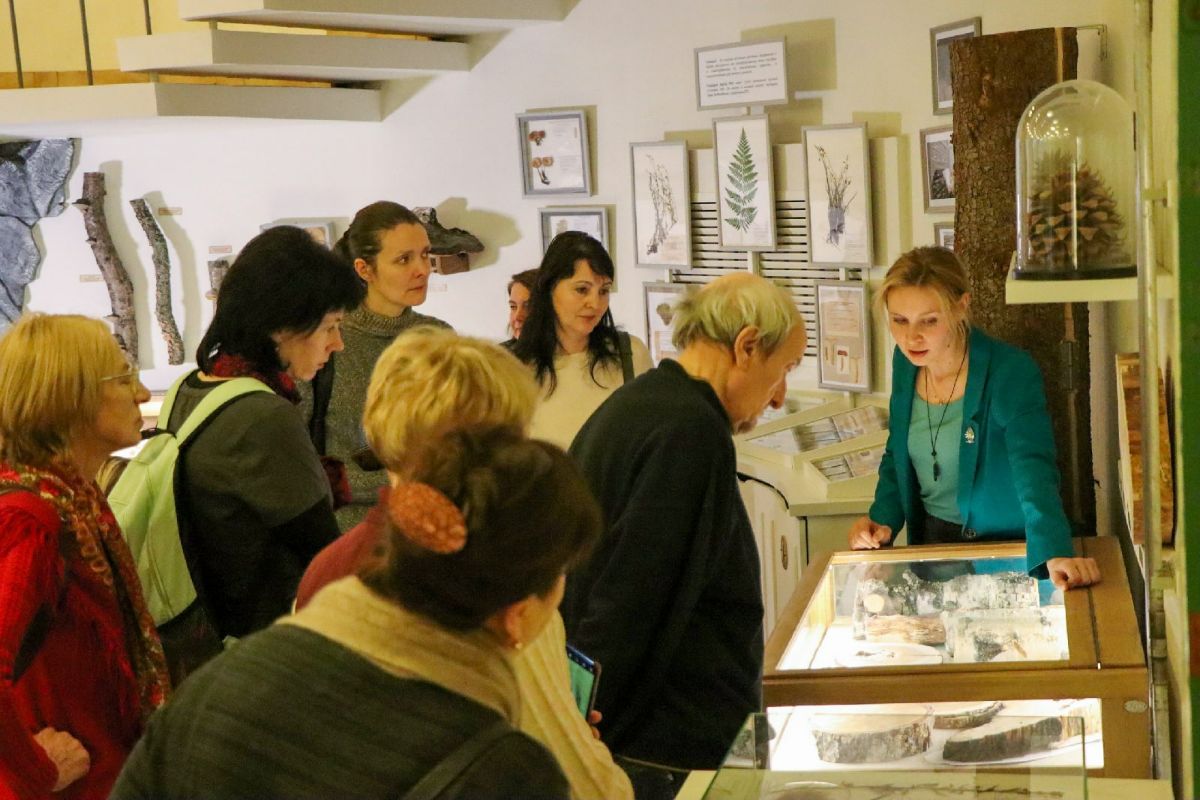
The Museum of Applied Environmental Research at KarRC RAS has summarized the results of three months of its operation. It was opened on September 26, 2022 and during these first three months mostly worked for organized groups of schoolchildren and university students. Over 600 visited the museum over this period of time: teaching staff and students from the city’s schools, colleges, Petrozavodsk State University, and other educational institutions. In October, members of the Youth Club of the Russian Geographical Society toured the exhibitions. Tours have been given also to groups of tour guides, to young and adult participants of the Russian Eco-dictation, and to groups of scientists from different parts of Russia – participants of conferences and seminars held at KarRC RAS in 2022.

In December the museum announced two trial calls for open tours for anyone subject to registration in advance.

– Both trials have demonstrated that the museum tours are in demand and attract most various visitor categories, so this practice will be continued in 2023. The first open-call tour will take place on January 27th, registration will be opened in advance in our VK community, – informed the museum project manager Alexandra Smirnova.
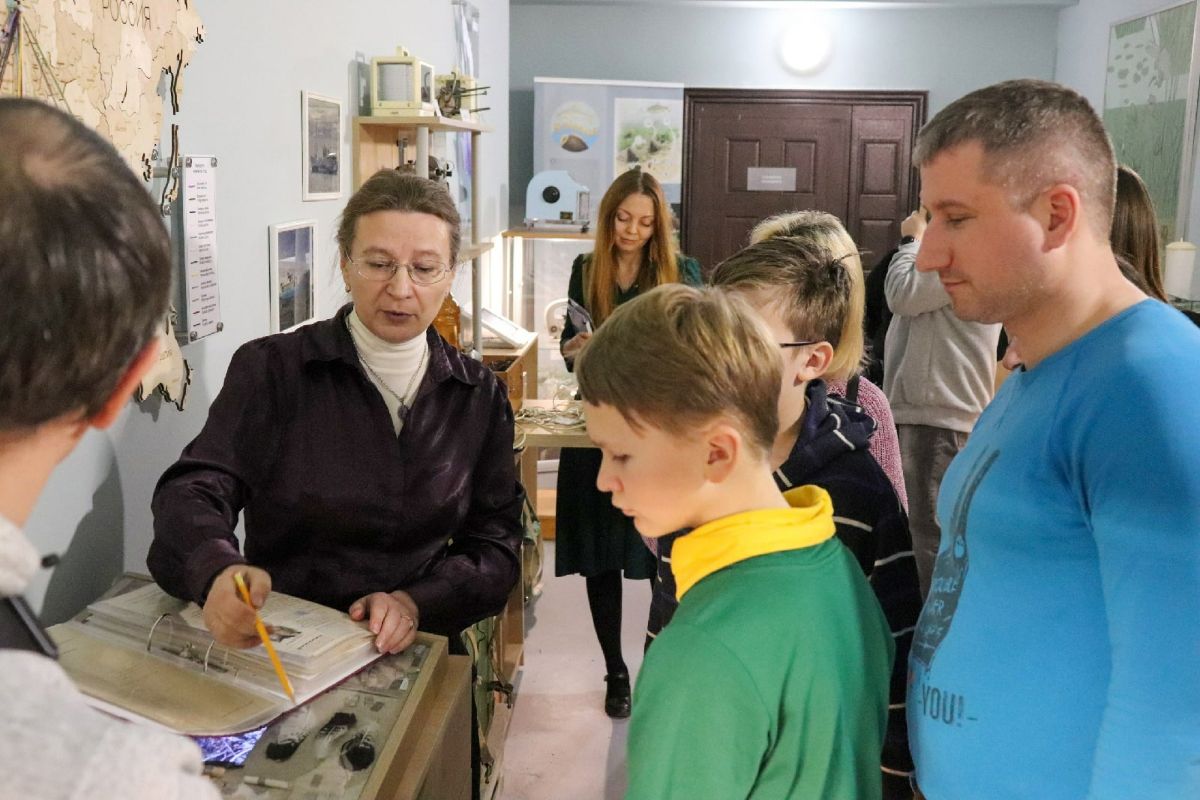

Secretary for Science of the Forest Research Institute KarRC RAS Nadezhda Nikolaeva guides visitors around the museum

The museum will also continue to augment its exhibitions in the new year. The plans include new formats of educational work, expanding the audience, including interactions with social service providers and professional groups, as well as searching for new development opportunities.

– We are grateful to all our guests for their interest in the Museum of Applied Environmental Research and in science in general. Special thanks are certainly due to staff of KarRC RAS institutes who have given gripping tours and lectures and contributed to the museum formation and activities, – Alexandra Smirnova added.

Tours for organized groups of schoolchildren (grades 7–11) or degree students can be arranged for via e-mail: ecomuseum@krc.karelia.ru. Application must specify the educational organization, grade/year, group size, desired time of visit, name and contact details of the group leader. Tours can be arranged on weekdays, chiefly at 11:00 and at 15:00. Average duration is 1 h 15 min. Entrance is free of charge.

See also:

June 25, 2026
Admissions for 2026/2027 doctoral studies at KarRC RAS are underway

On June 20, Karelian Research Centre began accepting applications for doctoral studies. A total of 8 full-time positions are available this year, 6 of which are state-funded. The submission deadline is July 2.
Applicants willing to take a doctoral course at the Karelian Research Centre RAS can submit their papers between June 20 and July 2.
June 24, 2026
Scientists of the Karelian Research Centre RAS propose restoring Karelian forests using locally sourced and bred planting stock

Scientists of the KarRC RAS took part in a meeting of the Head of the Republic of Karelia, Artur Parfenchikov, with representatives of the scientific community, members of the regional Legislative Assembly, as well as heads of the republic’s agencies, enterprises, and organizations dealing with reforestation.
Speaking at the meeting, KarRC RAS CEO Olga Bakhmet and Director of the Forest Research Institute KarRC RAS Boris Raevsky focused on research results, analyzed the situation with forest regeneration in Karelia, and proposed recommendations for augmenting and accelerating forest regeneration using domestic production of seeds and seedlings.
June 23, 2026
Karelian Research Centre RAS will contribute to creating bio-ecovillages in the Arctic zone of Karelia

KarRC RAS leader Olga Bakhmet gave a talk at a working meeting with the leadership of the Kurchatov Institute, ministers, and CEOs of Karelian enterprises and organizations, chaired by the Head of the Republic of Karelia, Artur Parfenchikov. The talk focused on the development of technologies for bioeconomy and their application in bio-ecovillages.