



KarRC RAS
in social media


in social media
News

January 10, 2026
New light scattering model to help assess and predict the state of marine systems
An international research team has developed a three-stream model of light scattering in the sea. It processes satellite data on the incoming and emitted light fluxes into information on water characteristics: presence of impurities, phytoplankton concentration, pollutants, and other parameters. The system of equations for this study was written by Ilya Chernov, Senior Researcher at the Institute of Applied Mathematical Research KarRC RAS. The model has been successfully tested in the Mediterranean Sea, and researchers are interested in trying it in application to the Arctic.
An international research team has developed a three-stream model of light scattering in the sea. It processes satellite data on the incoming and emitted light fluxes into information on water characteristics: presence of impurities, phytoplankton concentration, pollutants, and other parameters. The system of equations for this study was written by Ilya Chernov, Senior Researcher at the Institute of Applied Mathematical Research KarRC RAS. The model has been successfully tested in the Mediterranean Sea, and researchers are interested in trying it in application to the Arctic.

January 8, 2026
Karelian scientists surveyed the Mekong River Delta within a Russia-Vietnam project
Researchers from the Institute of Biology KarRC RAS Viktor Voronin and Dmitry Bityutsky took part in an expedition to the Mekong River Delta in Vietnam, which collected biological material for assessing the ecological status and biological resources of the Mekong Delta using biochemical profiling methods within an international cooperation initiative.
Researchers from the Institute of Biology KarRC RAS Viktor Voronin and Dmitry Bityutsky took part in an expedition to the Mekong River Delta in Vietnam, which collected biological material for assessing the ecological status and biological resources of the Mekong Delta using biochemical profiling methods within an international cooperation initiative.

January 5, 2026
Archaeologist Svetlana Kochkurkina: “I wrote this book out of gratitude to people of Kurkijoki Village”
The new book "Kurkijoki. Archaeology, History, Culture" has turned into a notable event for the academic community, as well as for enthusiasts of Karelian archaeology and history. The authors of the monograph are Svetlana Kochkurkina, Leading Researcher, Archaeology Section ILLH KarRC RAS, and Marina Petrova, Director of the Kurkijoki Local Lore Centre. The work summarizes the findings from many years of research into the archaeology, history, and culture of the Kurkijoki Village and its surroundings.
The new book "Kurkijoki. Archaeology, History, Culture" has turned into a notable event for the academic community, as well as for enthusiasts of Karelian archaeology and history. The authors of the monograph are Svetlana Kochkurkina, Leading Researcher, Archaeology Section ILLH KarRC RAS, and Marina Petrova, Director of the Kurkijoki Local Lore Centre. The work summarizes the findings from many years of research into the archaeology, history, and culture of the Kurkijoki Village and its surroundings.
January 3, 2026
Zoologists test biological samples from reindeer for toxic content
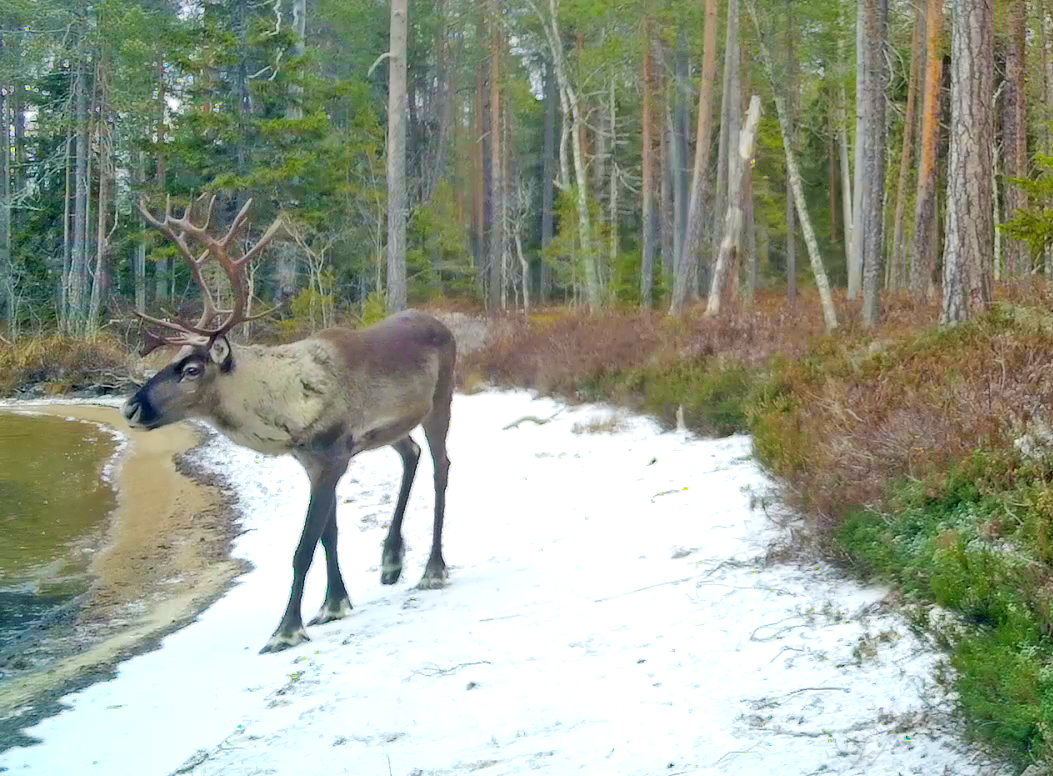
Karelian scientists have launched a new project as part of long-term studies of the state of the reindeer population. They will test biological samples from the animals for the presence of toxic elements – environmental pollutants. Zoologists are also continuing to monitor these red-listed animals using GPS-tracking collars and camera traps. The project gets funding from Severstal company. All wild reindeer populations in European Russia are listed in the national Red Data Book.
Karelian scientists have launched a new project as part of long-term studies of the state of the reindeer population. They will test biological samples from the animals for the presence of toxic elements – environmental pollutants. Zoologists are also continuing to monitor these red-listed animals using GPS-tracking collars and camera traps. The project gets funding from Severstal company. All wild reindeer populations in European Russia are listed in the national Red Data Book.
December 30, 2025
Scientists remind: eating fish regularly is essential for northerners
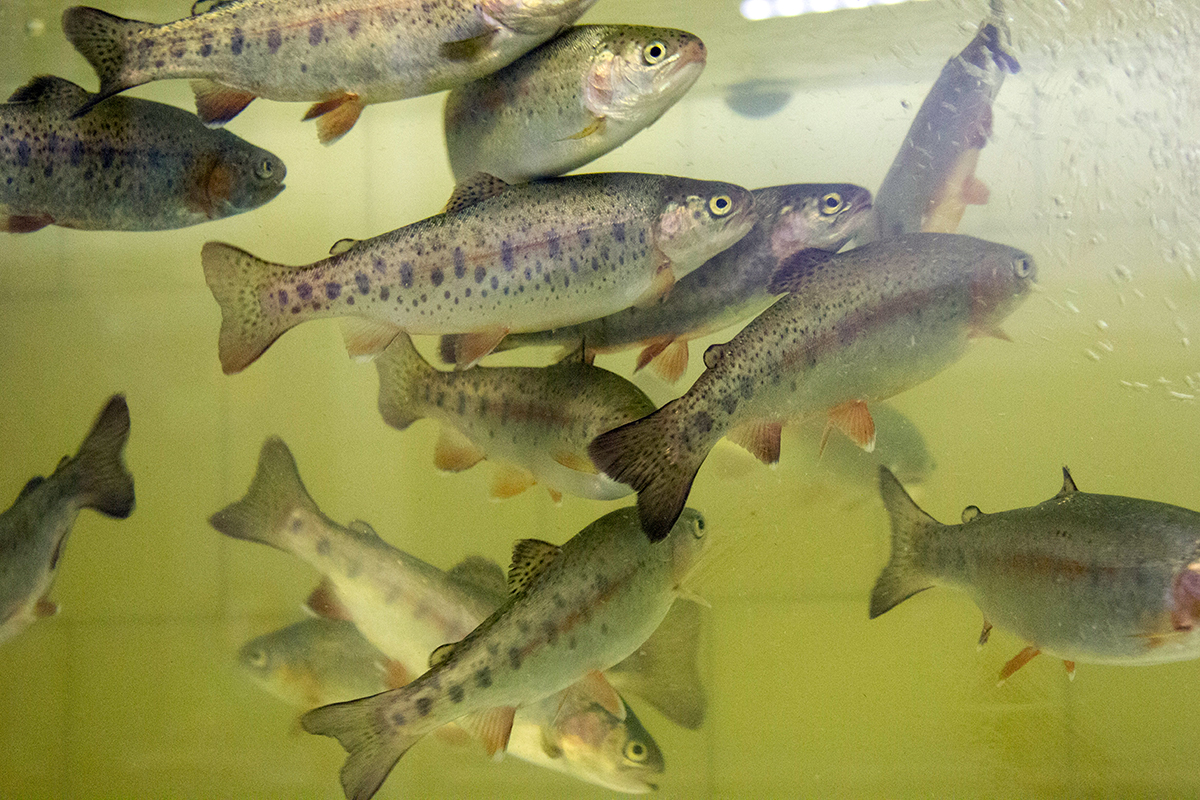
Biologists at KarRC RAS compared a range of blood plasma indicators – markers of cardiovascular disease risk – among residents of Karelia versus nationwide data. Despite the generally high risks for the heart and blood vessels, the region fares better in a key protective factor – the ‘good cholesterol’ level. Researchers attribute this to regular consumption of fish and fish products. Science confirms: fish, especially its fatter varieties, helps combat atherosclerosis and inflammation – key triggers of cardiovascular diseases, and is a natural way to keep the heart healthy.
Biologists at KarRC RAS compared a range of blood plasma indicators – markers of cardiovascular disease risk – among residents of Karelia versus nationwide data. Despite the generally high risks for the heart and blood vessels, the region fares better in a key protective factor – the ‘good cholesterol’ level. Researchers attribute this to regular consumption of fish and fish products. Science confirms: fish, especially its fatter varieties, helps combat atherosclerosis and inflammation – key triggers of cardiovascular diseases, and is a natural way to keep the heart healthy.

December 29, 2025
Mathematicians at KarRC RAS created a new model for the dynamics of predator-prey population interactions
Mathematics provides tools for modeling interactions between biological species – predators and prey – and predicting the behavior of certain populations depending on the state of other populations. Scientists at the KarRC RAS have created a hybrid 3D model that, among other things, accounts for predator migration in response to food shortage and their return to the patch if the resources are replenished. The development permits estimating the time such a recolonization would take, which has important practical applications.
Mathematics provides tools for modeling interactions between biological species – predators and prey – and predicting the behavior of certain populations depending on the state of other populations. Scientists at the KarRC RAS have created a hybrid 3D model that, among other things, accounts for predator migration in response to food shortage and their return to the patch if the resources are replenished. The development permits estimating the time such a recolonization would take, which has important practical applications.

December 26, 2025
Doctor of Biology Alexander Kryshen awarded the Sukachev Gold Medal from the RAS
Presidium of the Russian Academy of Sciences has awarded the Sukachev Gold Medal to Alexander Kryshen, Chief Researcher at the Forest Research Institute KarRC RAS. We congratulate Alexander Mikhailovich on this high professional recognition!
Presidium of the Russian Academy of Sciences has awarded the Sukachev Gold Medal to Alexander Kryshen, Chief Researcher at the Forest Research Institute KarRC RAS. We congratulate Alexander Mikhailovich on this high professional recognition!

December 26, 2025
Historians find valuable evidence of the past in a salary raise request by a 17th c. junior official
Historian from KarRC RAS Alexander Bochkaryov has analyzed a rare archival document, in which the life description of a person proxies key events of the mid-17th century Karelia: aftermaths of the Time of Troubles, establishment of the Olonets ‘’’new formation’ regiments, problems of the Army, serf peasants’ flight due to famine and their return by force, landmark episodes of the Russo-Swedish War of 1656–1658, and development of the bureaucratic class in Russia.
Historian from KarRC RAS Alexander Bochkaryov has analyzed a rare archival document, in which the life description of a person proxies key events of the mid-17th century Karelia: aftermaths of the Time of Troubles, establishment of the Olonets ‘’’new formation’ regiments, problems of the Army, serf peasants’ flight due to famine and their return by force, landmark episodes of the Russo-Swedish War of 1656–1658, and development of the bureaucratic class in Russia.